Fes el-Bali, the old medina of Fes, is one of the largest car-free urban areas in the world and a UNESCO World Heritage Site. It is a dense maze of lanes, workshops and madrasas that feels more medieval than most other Moroccan cities, and it is also easy to get lost in.
This guide explains what to see, how to navigate, whether you need a guide and how to plan two days in Fes.
Key takeaways
- Plan 2 days for Fes; start early in the morning when the medina is quiet.
- A licensed guide for the first half-day is worth it; use an offline map afterwards.
- Do not miss the Bou Inania Madrasa, the Chouara Tannery and the Al-Attarine Madrasa.
- Ignore anyone who says your route is closed; agree prices before you start.

What makes Fes special
Fes was founded at the end of the 8th century and became a centre of religion, learning and craft. The medina is traditionally said to contain thousands of alleys. The Al-Qarawiyyin, founded in 859, is considered one of the oldest continuously operating universities in the world. Today the medina is still a working city where artisans make leather, metalwork, ceramics and wooden furniture.
The best sights
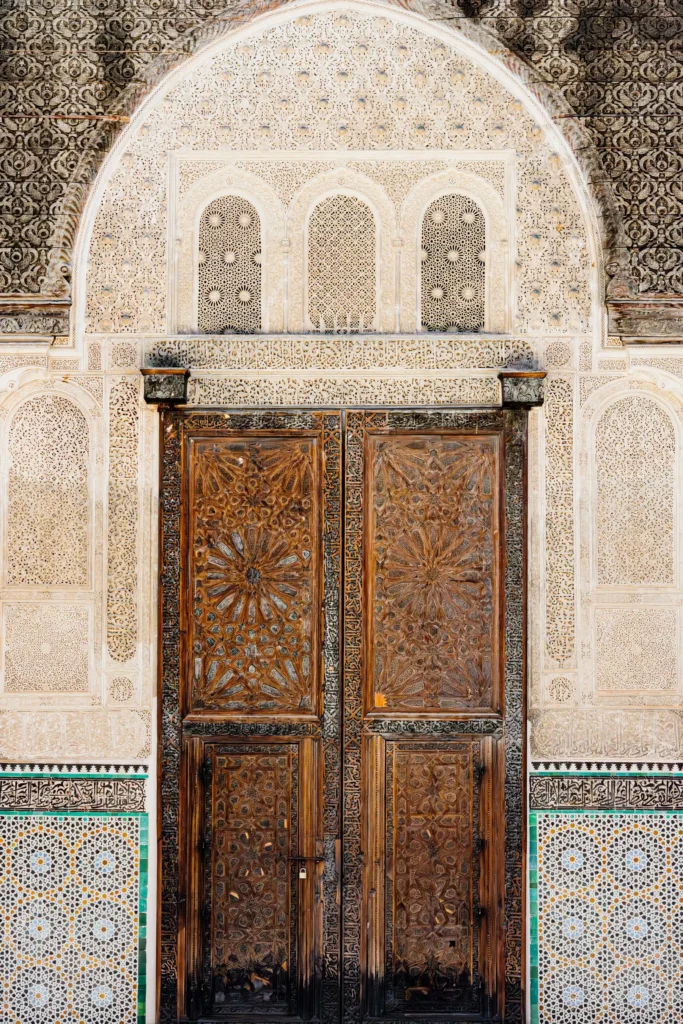
- Bou Inania Madrasa: a 14th-century Marinid religious school with carved cedar, stucco and tiled courtyards. It is one of the few religious buildings open to non-Muslims.
- Al-Attarine Madrasa: a smaller but beautiful madrasa near the spice sellers.
- Al-Qarawiyyin: the historic mosque and university. Non-Muslims cannot enter, but you can look through the doors from the street.
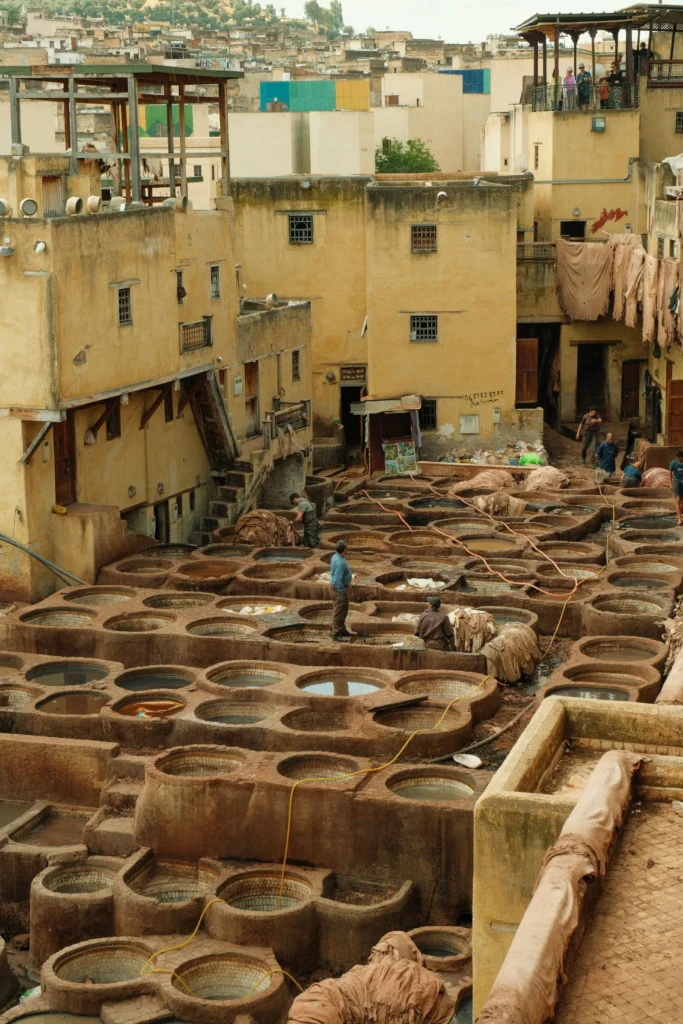
- Chouara Tannery: the open-air leather tannery where hides are dyed in stone vats. You see it from a terrace of the leather shops around it.
- Nejjarine Museum of Wooden Arts and Crafts: a restored fondouk with a rooftop café.
- Place Seffarine: the coppersmiths’ square, with the sound of hammering.
- Bab Boujloud: the blue gate where most visitors enter the medina.
The Chouara Tannery
The tannery is smelly but unforgettable. Leather shops around it offer a free view from the terrace and often hand visitors a sprig of mint to hold to their nose. Expect to be invited into the shop; there is no obligation to buy, but a polite “no thank you” works better than a rush out. Morning is the best time, when the vats are busiest.
How not to get lost
- Follow the main arteries: Talaa Kebira and Talaa Sghira run down from Bab Boujloud and are the clearest routes.
- Download an offline map before you go. GPS works, although alleys can be twisting and signals weaker.
- Note your gate: know which gate you want to leave by, and use it as a reference.
- Keep to busy lanes: quiet alleys are not unsafe by day, but you are more likely to be redirected by strangers.
- Stand aside for donkeys and carts: you will hear “balak!” (watch out) as a warning.
Do you need a guide?
A licensed guide for the first half-day makes the medina much easier: they know the workshops and can explain what you are seeing. Book through your riad or the tourist office, confirm the price and duration in advance and ask whether entrance fees are included. After that, many visitors explore on their own.
Scams and annoyances to avoid
- Strangers who say a street is closed and offer to lead you elsewhere.
- “Free” guides who ask for money afterwards.
- Shops that insist you buy after a tannery view: you do not have to.
- Taxis that refuse to use the meter outside the medina.
A 2-day plan
- Day 1: Enter by Bab Boujloud, walk Talaa Kebira, visit Bou Inania and Al-Attarine, lunch in the medina, then the tannery and the Place Seffarine.
- Day 2: Walk or drive to the Marinid Tombs for a sunset view over the city; visit Fes el-Jdid and the Mellah, or take a day trip to Meknes and Volubilis or to Chefchaouen.
See the Fes destination page for tours, activities and where to stay, and the Meknes page for Volubilis.
Where to stay
A riad inside the medina puts you in the atmosphere but needs a porter for your bags, while the new town has larger hotels and is easier by car. Our Hotels & Riads section lists options such as Riad Fes – Relais & Châteaux and Palais Amani.
Shopping in Fes
Fes is known for leather goods, blue-and-white ceramics, brass and copper, woven textiles and carved wood. The medina is the best place to shop, and workshops often let you watch the craftspeople at work. Prices are negotiable, so compare shops and remember that you are buying handwork. Ask for the item to be wrapped, and confirm shipping prices for large pieces in writing.
Eating in Fes
Fes is known for its cuisine, and a meal here is as much a part of the visit as the sights. Try a pastilla, a tagine or a rfissa in a riad restaurant, and look for small local eateries for lunch. Stalls near Bab Boujloud sell grilled meat, olives and fresh bread. See our Moroccan food guide for more.
Day trips from Fes
- Meknes and Volubilis: an imperial city and Roman ruins. See the Meknes page.
- Chefchaouen: about 4 hours by road; see the Chefchaouen page.
- Sahara tour: multi-day tours run from Fes to the Merzouga dunes and on to Marrakech.
Frequently asked questions
How many days do I need in Fes?
Two days is enough for the main sights. Add a third for a day trip to Meknes and Volubilis or to Chefchaouen.
Is the Fes medina safe?
It is safe for visitors, with the usual care for pickpockets in crowded places and persistent touts. Keep valuables out of sight.
Is the medina suitable for children or reduced mobility?
It is cobbled, crowded and steep in places, with no cars and many steps. A hotel outside the medina and a short visit may suit you better.
Final verdict
Fes rewards slow mornings, a good guide for the first hours and a willingness to be a little lost. Combine it with Marrakech and the Sahara in our Ultimate Morocco Travel Guide, or compare tours and day trips, or send us your dates on the Plan My Trip page.
Affiliate disclosure: some links in this guide may be affiliate links. If you book through them we may earn a commission at no extra cost to you. This does not change our recommendations. Read our Affiliate Disclosure for details.