Moroccan food is one of the best reasons to visit. It combines Arab, Amazigh (Berber), Mediterranean and Andalusian influences, with slow-cooked stews, fragrant spices, fresh bread and sweet mint tea.
This guide lists the dishes and drinks worth looking for, what they are, and a few tips on where and how to eat them.
Key takeaways
- Start with a tagine, a couscous (traditionally eaten on Fridays) and a bowl of harira soup.
- Eat the street food at busy stalls and ask the price first.
- Bread is your fork: eat with your right hand and share from the central dish.
- Many dishes are vegetarian (vegetable tagine and couscous, salads).
Main dishes
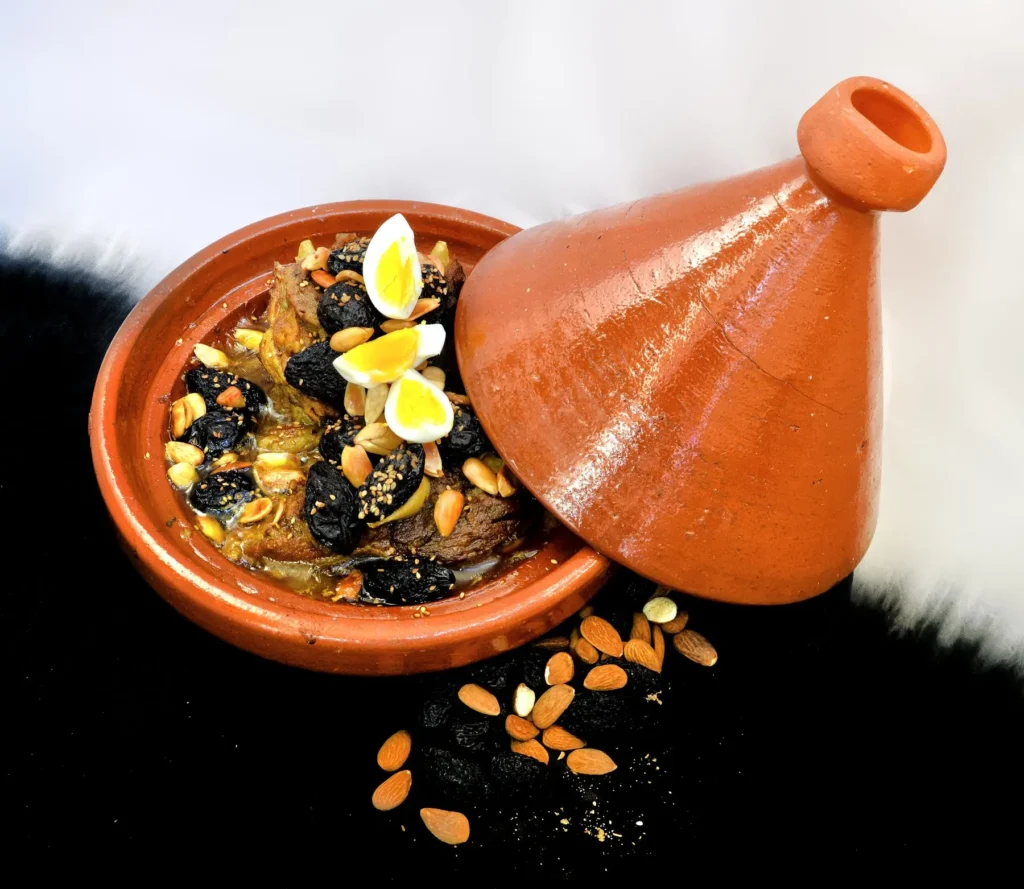
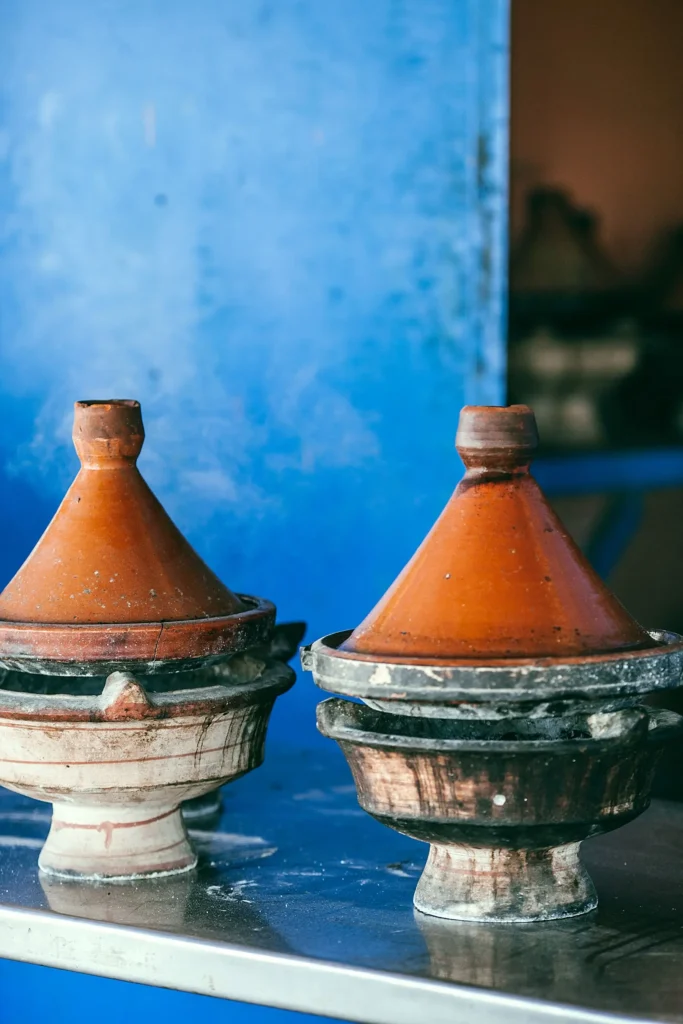
- Tagine: meat or vegetables slow-cooked in a conical clay pot. Classic versions are chicken with preserved lemon and olives, lamb with prunes and almonds, and kefta (meatballs) with eggs.
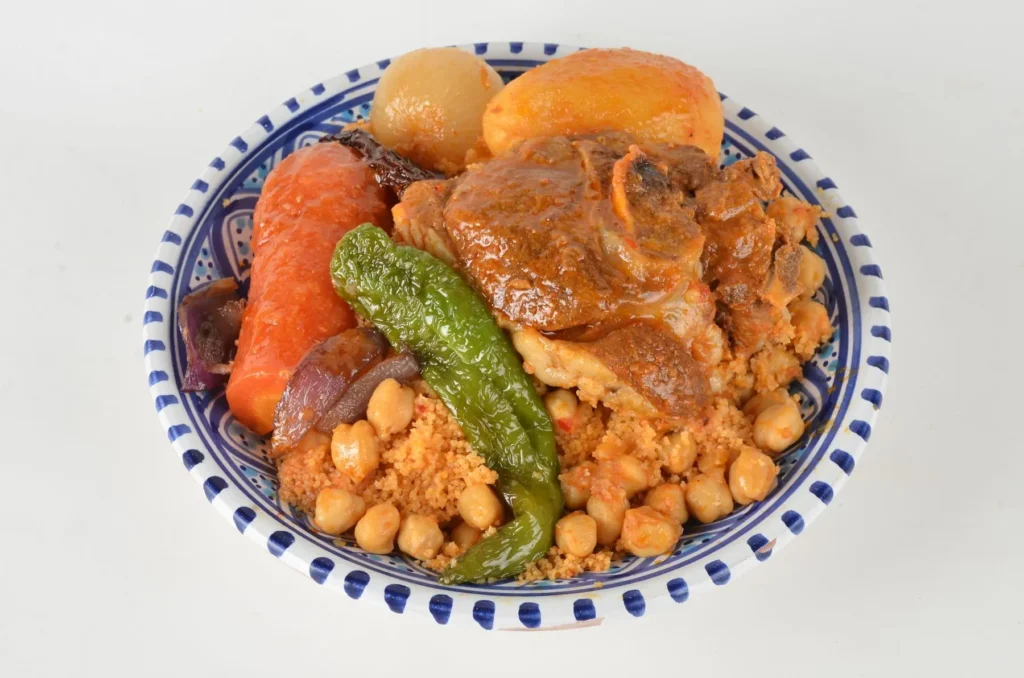
- Couscous: steamed semolina topped with vegetables and meat. In many families it is the traditional Friday meal.
- Pastilla (bastilla): a thin, flaky pie, traditionally with pigeon but often made with chicken, finished with cinnamon and sugar. Common in Fes.
- Tanjia: a Marrakech speciality of meat slow-cooked in an urn, historically in the embers of a hammam furnace.
- Mechoui: whole or half a lamb slow-roasted, served with salt and cumin.
- Rfissa: chicken with lentils and fenugreek over shredded flatbread, often served for celebrations.
- Grilled fish and sardines: the speciality of the coast, especially Essaouira and Safi.
Soups, salads and starters
- Harira: a tomato and lentil soup with chickpeas, often served with dates and honey sweets to break the fast in Ramadan.
- Zaalouk and taktouka: cooked salads of aubergine and tomato, or peppers and tomato, eaten with bread.
- Briouats: small, crispy pastries stuffed with cheese, meat or almonds.
Street food and snacks
- Kefta and brochettes: grilled spiced meat from the stalls of Jemaa el-Fna and other markets.
- Snail soup (babbouche): a popular winter snack at Jemaa el-Fna.
- Msemen, baghrir and harcha: pancakes and flatbreads for breakfast with honey, butter or jam.
- Sfenj: fried doughnuts sold fresh in the morning.
Sweets and drinks
- Chebakia and gazelle horns: sesame and honey cookies and almond-filled pastries, sold in every bakery.
- Mint tea: green tea with fresh mint and plenty of sugar, poured from a height. Refusing a first glass can seem impolite.
- Fresh juice and avocado shakes: orange juice is cheap and fresh at stalls, and thick avocado and date milkshakes are a local favourite.
- Nus nus: half coffee, half milk.
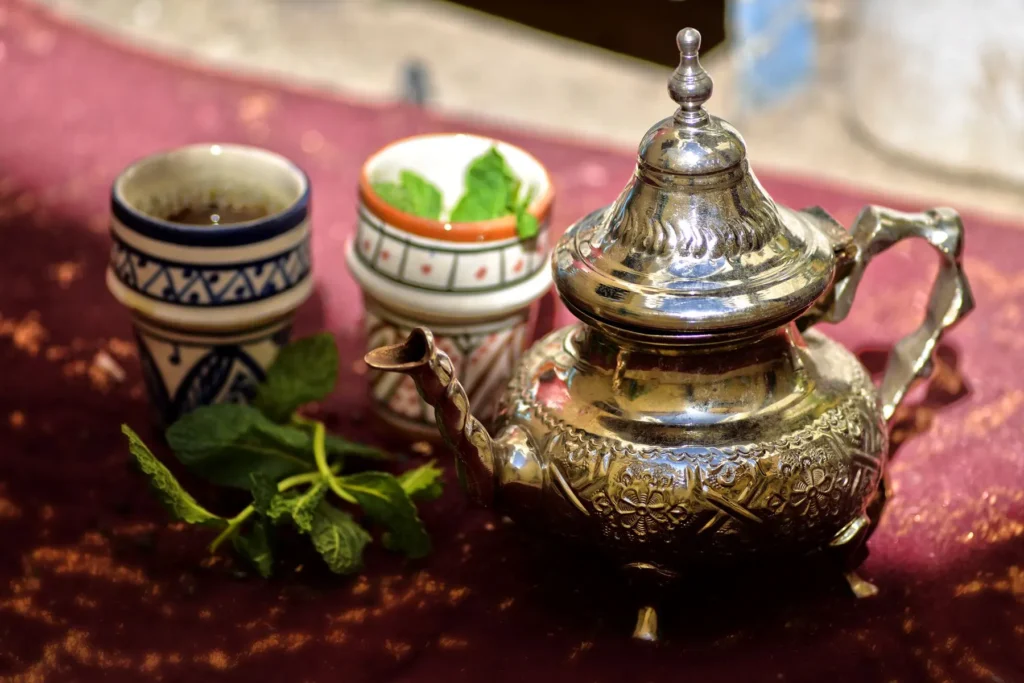
Etiquette at the table
- Wash your hands, and eat with your right hand when sharing from a communal dish.
- Use bread to scoop food instead of cutlery, and take the part of the dish in front of you.
- If you are invited to a home, a small gift such as pastries is appreciated.
- Alcohol is available in licensed restaurants and hotels but not everywhere.
Where and how to eat
- Choose busy places: a long queue of locals is the best recommendation.
- Check the menu prices in tourist squares before you sit down.
- Ask for dishes without meat if you are vegetarian: vegetable tagines and couscous are common.
- Drink bottled water and peel fruit you buy at markets.
A cooking class is the best way to learn the basics. See the Moroccan Cooking Class with Hotel Pickup in Marrakech or browse more city activities.
Regional specialities
- Fes: pastilla, rfissa and refined sweets; the city is known for its cuisine.
- Marrakech: tanjia, mechoui and the stalls of Jemaa el-Fna.
- Essaouira and the coast: grilled fish, sardines and shellfish.
- The north (Tangier and Chefchaouen): Mediterranean seafood and Spanish-influenced dishes, plus fresh goat’s cheese in the Rif.
- The south and the desert: dates, simple tagines and bread cooked in the sand (known as madfouna).
A day of eating
- Breakfast: msemen or baghrir with honey, olives, eggs and mint tea.
- Lunch: a tagine or couscous in a local restaurant, plus a fresh juice.
- Afternoon: a pastry and coffee in a café, or nus nus.
- Dinner: a mix of grilled meat, salads and soup at the stalls, or a pastilla in a restaurant.
Frequently asked questions
Is Moroccan food spicy?
Usually not hot. It is fragrant and well seasoned with spices such as cumin, ginger and saffron. Chilli paste (harissa) is served on the side.
Is it safe to eat street food?
Generally yes, if you choose busy stalls with fresh, hot food. Start slowly if your stomach is sensitive.
Can vegetarians eat well in Morocco?
Yes. Look for vegetable tagines and couscous, salads, lentil dishes and soups. Ask for no meat because broth is sometimes used.
Final verdict
Eat slowly, share dishes and say yes to mint tea. Once you know the basics, the best meals are often in family restaurants rather than the most famous squares. Planning where to eat in each city? Read our things to do in Marrakech and Fes medina guide, or send us your dates on the Plan My Trip page.
Affiliate disclosure: some links in this guide may be affiliate links. If you book through them we may earn a commission at no extra cost to you. This does not change our recommendations. Read our Affiliate Disclosure for details.